Claremont Landscape Garden sits on the Portsmouth Road at Esher, KT10 9JG, a few minutes from the A3. It is a 49-acre National Trust garden, listed Grade I on the Register of Parks and Gardens, and one of the few places in Surrey where you can read three centuries of English taste in a single walk. It suits anyone with an afternoon to spare, and October is a good month for it.
The amphitheatre and the lake
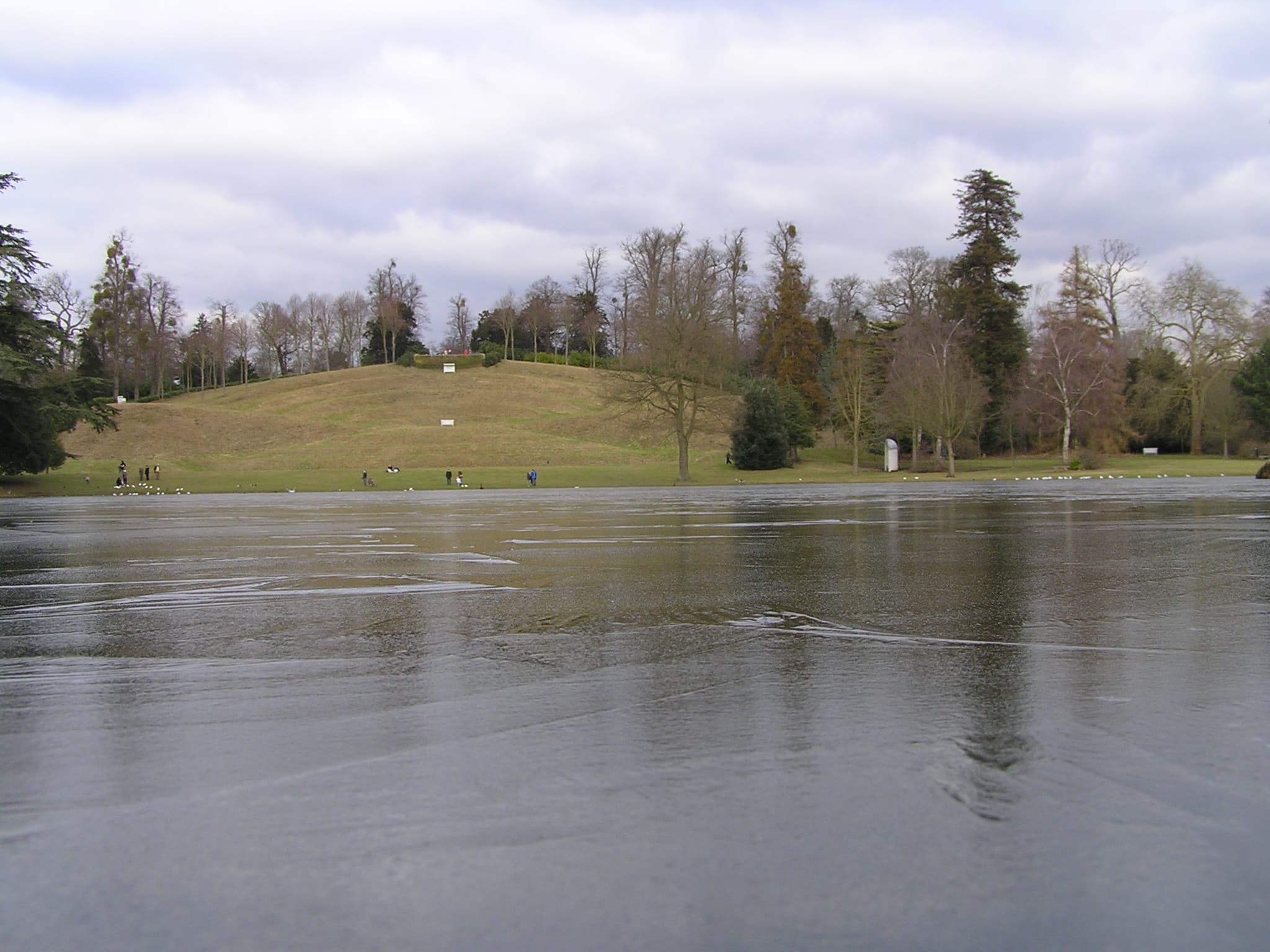
The first thing to see is the grass amphitheatre. It covers three acres, curves around one half of the lake, and the National Trust says it is believed to be the largest of its kind left in Europe. Charles Bridgeman cut it into a hillside in the 1720s as the centrepiece of a formal garden. From the top the view runs out across the lawns and the water.
The lake began as a round basin at the foot of the slope. In the 1730s William Kent enlarged it into a serpentine lake and added an island with a pavilion, which still sits opposite the amphitheatre. Boat hire runs in spring and summer, so in October the water is for looking at, from the terrace opposite the café, which has ramp access.
From Vanbrugh to Capability Brown
The National Trust credits four designers: John Vanbrugh, Bridgeman, Kent and Lancelot "Capability" Brown. Vanbrugh bought the land in 1709, built himself a retreat and probably began the garden. In 1714 he sold to Thomas Pelham-Holles, later Duke of Newcastle, and the estate took its name from his earldom of Clare. Vanbrugh also designed the Belvedere Tower, around 1715. Its windows are said to be bricks painted black and white, to read as glass from a distance.
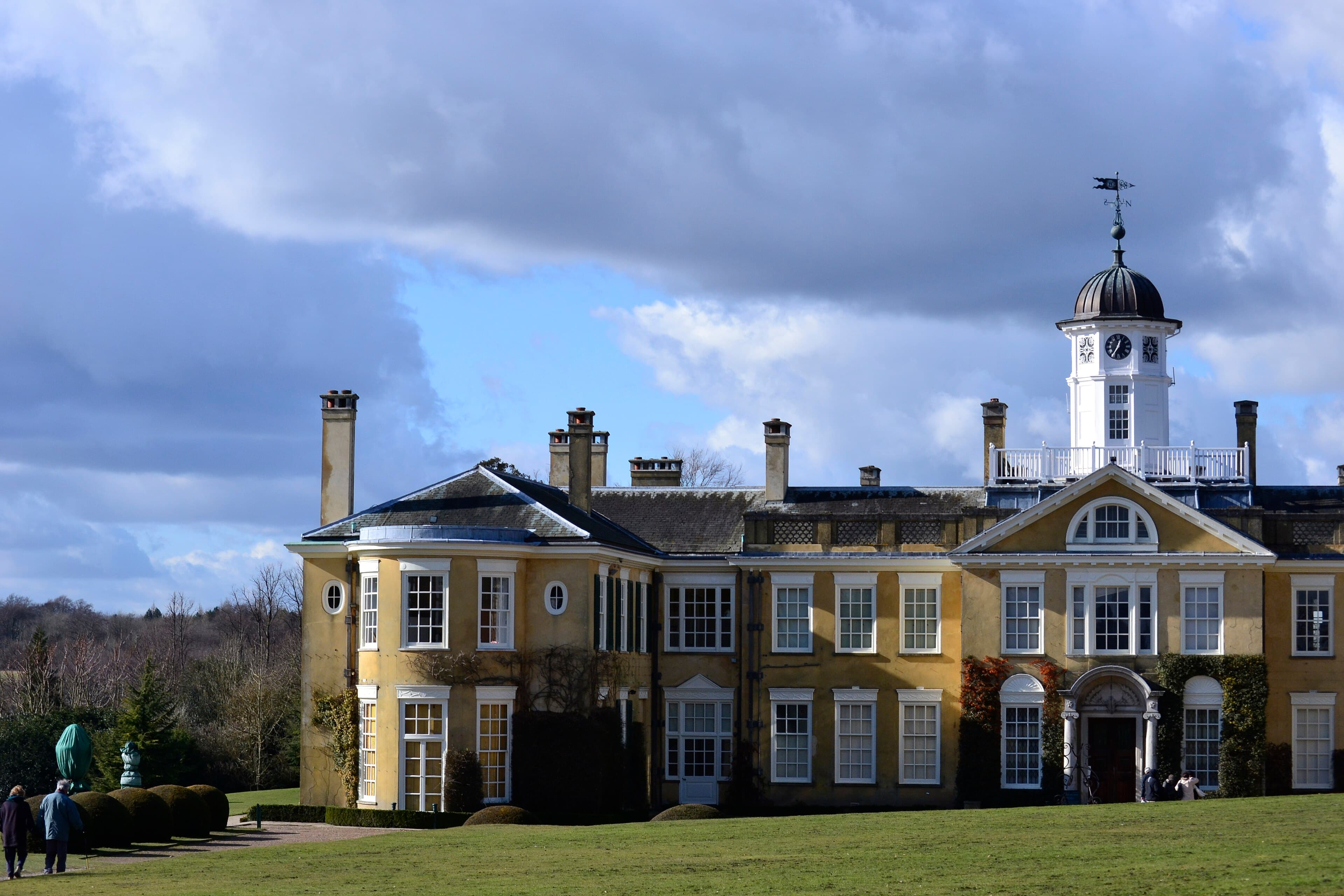
The formal style went out of fashion, and Newcastle called in Kent to loosen it. In 1769 Robert Clive bought the estate for £25,000, about £2.5m today according to the National Trust. He pulled down Vanbrugh's house, thinking it too damp, and commissioned a new one on higher ground from Brown, Henry Holland and the young John Soane. Brown also altered the line of the ha-ha and diverted the Portsmouth Road. Clive died in 1774, before the house was finished.
Charles Ellis, who followed Clive, sold Claremont to the Government in 1816. The National Trust notes that part of his wealth came from a Jamaican sugar plantation and enslaved people. The house then became the home of Princess Charlotte of Wales and Prince Leopold. Charlotte died there in childbirth at 21, and the grounds were opened to thousands of mourners. Queen Victoria visited often, and from 1848 the exiled French king Louis-Philippe lived at Claremont. In 1866 Victoria acquired the estate herself to save it from development.
In 1930 a school bought the mansion, the Belvedere and 30 acres. It is now Claremont Fan Court School, which still owns both. The garden itself passed to the National Trust in 1949, by then overgrown with laurel and rhododendron. The Trust took over management in 1975 and, with a Slater Foundation grant and volunteers, dredged the lake, repaired buildings and cleared scrub from the amphitheatre. It became one of the first large-scale garden restorations and won a Europa Nostra diploma.
The Belvedere is inside the school grounds and is not normally open. It welcomed visitors on Heritage Open Days on Saturday 19 September 2026, the 300th anniversary of Vanbrugh's death, as Surrey Live reported. Otherwise you will see it from the garden.
The walk
North Terrace. Recently restored, and one of the main features. A cleared view opened in winter 2020 shows the Belvedere from the south side: it appears as you climb from the ha-ha, disappears near the camellias, and returns at the gates to the Mount.
Camellia Terrace. The site of Charlotte and Leopold's heated glasshouse. The camellias flower from January to May, so October is quiet here, but raised beds from the 1824 Camellia House survive. A boar, a peacock and a bear stand on the path up to it.
The Grotto. Three caves, built to look natural and a little precarious, replaced an earlier cascade.
Nine Pin Alley. It runs east past the foundations of an 18th-century temple.
Kent's ditch and Brown's ha-ha. A path follows them south-west across open lawns towards the lake.
The National Trust points to 300-year-old sweet chestnuts dropping conkers, yellowing avenues and leaves to shuffle through. Allow at least an hour; a slower loop with a stop at the lake will take longer.
Planning your visit
For the second half of October the National Trust lists the garden open daily 9am to 5pm and the Gardener's Bothy Café 9am to 4.30pm. Last entry is an hour before closing, and the car parks are locked at closing time. Check the National Trust page before you set off, as the garden closes in high winds.
Tickets. Adults £15.40 with Gift Aid (£14.00 without), children aged 5 to 17 £7.70 (£7.00), family £38.50 (£35.00). Children aged 4 and under and members are free. No booking is needed for a normal visit.
Parking. Free, about 10 metres from the entrance kiosk, but small and quick to fill. Arrive soon after the 9am opening. Overflow parking on West End Lane, across Portsmouth Road, is not National Trust.
Without a car. The 714 and 715 buses stop outside the front gate, and a valid bus ticket takes £1 off a café purchase. Esher station is about two miles away. Bicycles are not allowed in the garden, but there are racks by the kiosk.
Underfoot. Paths are hoggin and grass, uneven and muddy after rain. A steep path on the west boundary is unsuitable for wheelchairs and buggies. There is an all-terrain wheelchair and six blue-badge spaces.
Dogs. Well-controlled dogs on short leads are welcome in designated areas, but not the play area, Badger's Basecamp or the lake.
Families. There is a play area and storybook trails.
The café and toilets can be used without a garden ticket, according to Accessable. The free guided Tree Walk (first Tuesday of the month) and History Walk (first Friday) next fall on 3 and 6 November. For the full story of the owners, the National Trust history page is worth a read before you go.